
Fabric wrapping
Furoshiki is a Japanese tradition of wrapping and carrying objects in cloth. The technique is beautiful because the material, knot and object work together—and because the cloth can be used again.
Choose the cloth before the knot
Measure the gift diagonally, not only across the top. The cloth must travel up the sides and leave enough length for a secure knot. A 50 cm square often suits a book or small box; medium boxes commonly need 70 cm; larger bundles may need 90–100 cm or more.
Cotton is forgiving and holds a knot. Polyester can be vivid and washable but may slide. Silk is beautiful and inappropriate around sharp corners, leaks or rough transport. A scarf or tea towel can be excellent reusable wrapping, but call it fabric wrapping unless its provenance is known.
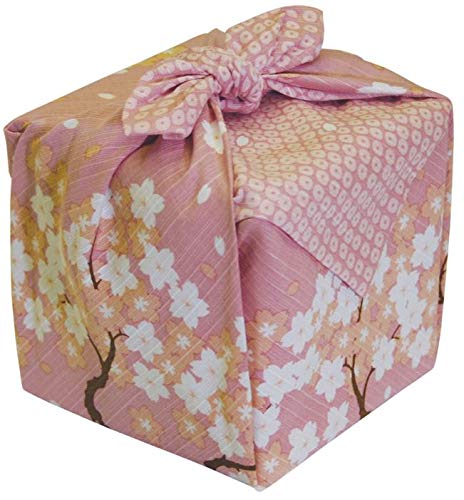

The basic box wrap
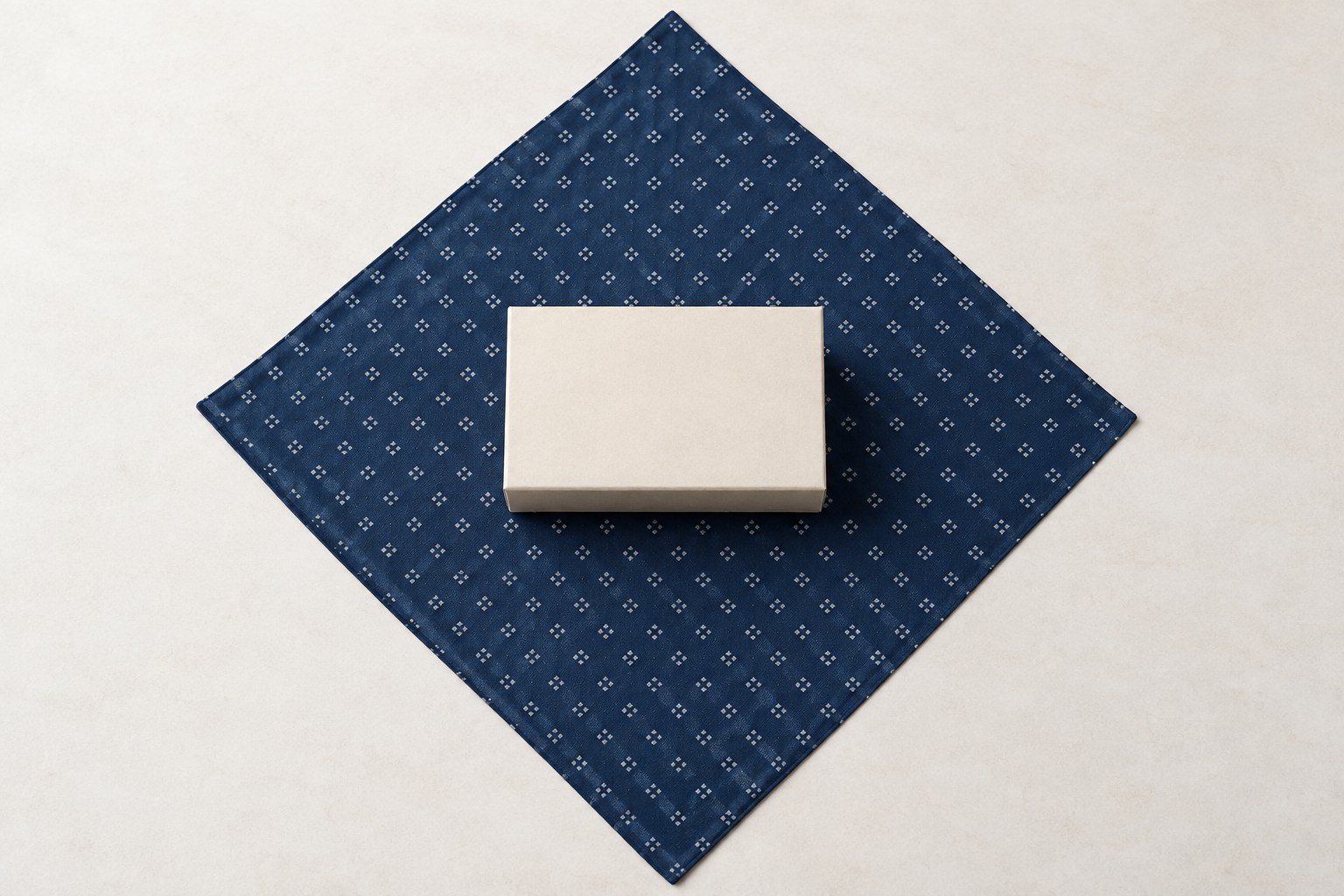
- Place the cloth wrong-side up like a diamond.
- Centre the box with its long edges pointing toward opposite corners.
- Bring the near and far corners over the box; tuck the first under the second if the fabric allows.
- Bring the side corners together and tie a flat square knot: right over left, then left over right.
- Spread the knot ends so the pattern looks deliberate.
If the corners barely meet, use a larger cloth. If the box slides, begin with a single snug overhand knot before completing the square knot.
Bottle wrapping
Lay the bottle diagonally, roll it once in the cloth, then stand it up. Bring the remaining ends above the shoulder and tie securely. Two bottles need padding between the glass and a much larger cloth. Carry from the bottle body; do not assume a decorative knot is a safety-rated handle.
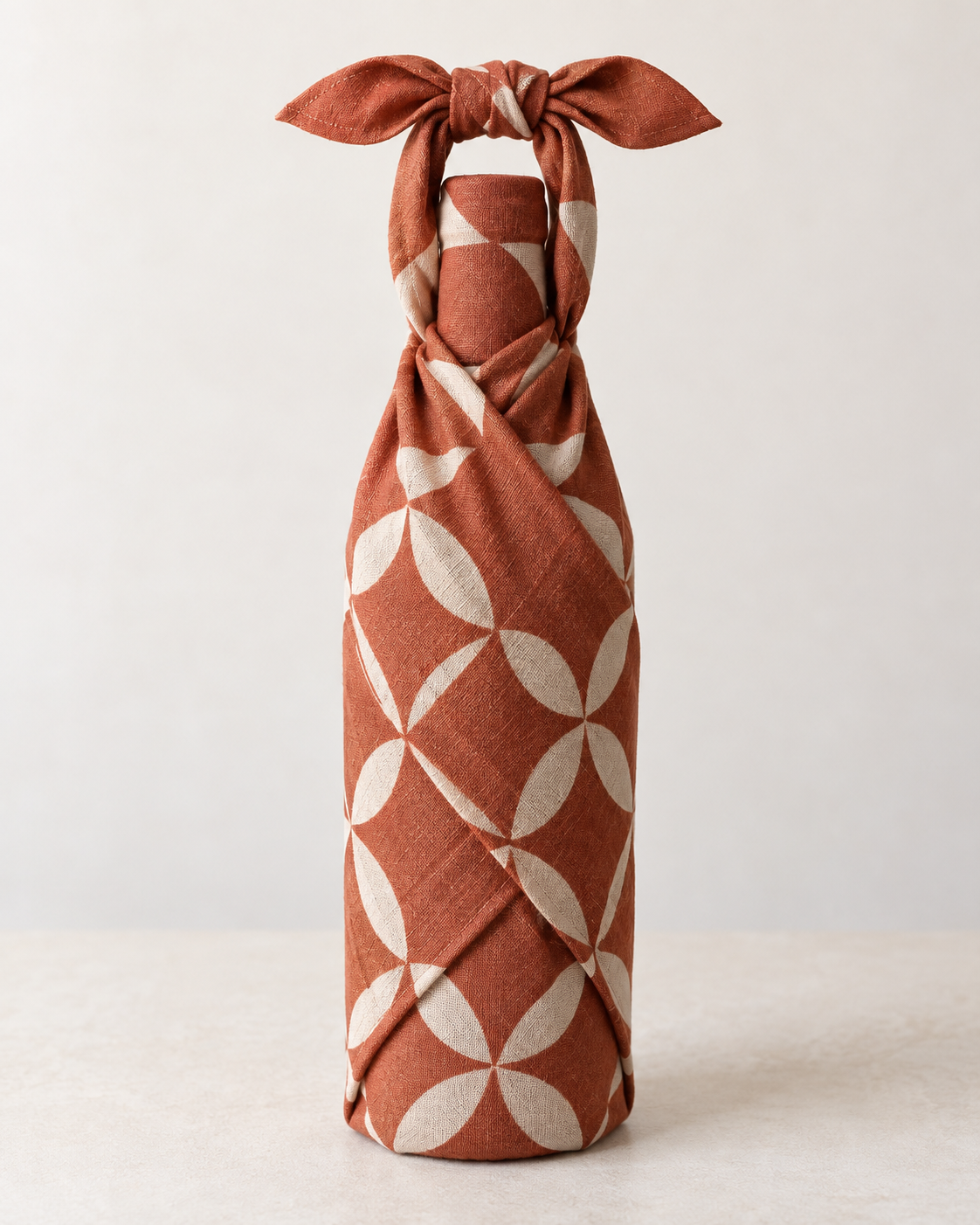
A handle wrap
For a light box, tie adjacent corners at each end to form two short handles, then knot the handles together or carry them separately. Test over a bed or sofa first. Heavy, sharp or fragile items still need a proper bag or box.
When the cloth becomes part of the gift
A tea towel suits a kitchen gift; a scarf suits someone who will wear it; a purpose-made furoshiki can be reused for lunches, storage or the next gift. Add a small note explaining the reuse so the recipient does not treat the cloth as disposable packaging.
Care and limitations
Untie rather than pulling hard. Follow the textile label, smooth the cloth and store it folded flat. Do not wrap wet, oily or sharp objects directly. For mailing, the fabric is the presentation layer inside a rigid shipping box with cushioning.
Finishing without overdoing it
The knot is usually enough. A narrow tag, sprig or small strip of washi can help identify the recipient. Washi tape should go on the tag or an outer paper band, not on delicate fabric.